
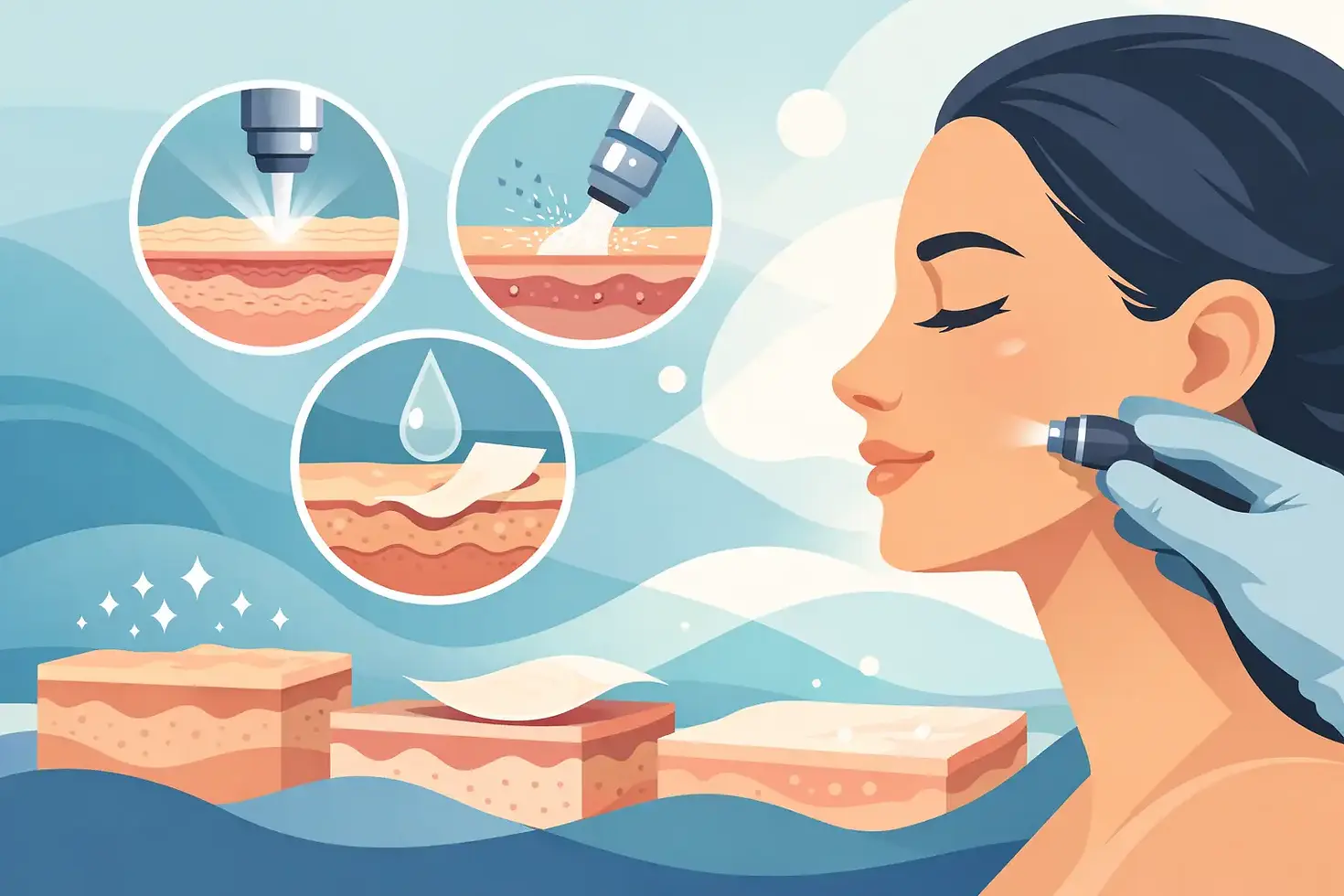
A Guide to Skin Resurfacing Options

Some skin concerns do not need a dramatic fix. They need the right level of intervention at the right time. If you have been looking for a guide to skin resurfacing options, that is usually the real question underneath it all: what will actually help your skin without pushing it too far?
Skin resurfacing is a broad category, and that is where many people get stuck. One treatment may target texture well but require more downtime. Another may be gentler and better for maintenance, but slower to produce visible change. The best choice depends on your skin condition, your tolerance for recovery, your history with pigmentation or sensitivity, and how consistent you can be after treatment.
What skin resurfacing really means
Skin resurfacing refers to treatments that improve the skin's surface by encouraging exfoliation, regeneration, or controlled repair. The goal is usually smoother texture, more even tone, softer fine lines, reduced acne scarring, or brighter overall skin.
That does not mean every resurfacing treatment works the same way. Some remove or loosen dead surface cells. Some create tiny controlled injuries that stimulate collagen remodeling. Others use heat or light to address deeper layers. The category is wide, which is why a thoughtful plan matters more than chasing the most aggressive option.
For many clients, the most effective approach is not a single appointment. It is a treatment pathway that corrects what needs attention, then maintains the progress so the skin stays stable and strong.
A practical guide to skin resurfacing options
If you are comparing treatments, it helps to think in terms of intensity, downtime, and what concern is leading the decision.
Chemical peels
Chemical peels use acids or enzyme-based formulas to exfoliate the skin and encourage turnover. Light peels can help with dullness, mild discoloration, congestion, and rough texture. Medium-depth peels can address more visible pigment and textural irregularities, but they usually come with more peeling and a longer recovery window.
Peels can be a strong option for clients who want brighter, smoother skin without jumping straight into energy-based devices. They also vary widely. A gentle professional peel may fit well into a maintenance plan, while a stronger peel may be used more selectively for correction.
The trade-off is that not every peel is right for every skin tone or sensitivity level. If your skin is reactive, inflamed, or prone to post-inflammatory hyperpigmentation, the formula and strength need to be chosen carefully. More intensity is not automatically better.
Microneedling
Microneedling creates controlled micro-injuries in the skin to stimulate collagen production and support repair. It is often recommended for acne scarring, early fine lines, enlarged pores, and uneven texture. Many people like it because it improves the skin from within rather than relying only on surface exfoliation.
This option tends to sit in a useful middle ground. It is more corrective than a light peel, but often involves less downtime than some laser treatments. Most clients can expect redness for a day or two, followed by a temporary dry or tight feeling.
Microneedling also works best as a series, not a one-time event. If your goal is meaningful change in scarring or texture, consistency matters. It is a good example of a treatment that rewards patience.
Laser resurfacing
Laser treatments use targeted energy to improve texture, tone, sun damage, and sometimes deeper lines or scars. Some lasers remove the top layer of skin, while non-ablative options work below the surface with less visible downtime. There is a wide range here, which is why "laser" by itself does not tell you much.
For the right candidate, laser resurfacing can produce dramatic improvement. It can be especially appealing when sun damage, fine lines, or more advanced textural concerns are in the picture. But this category requires careful screening. Skin tone, recent sun exposure, medication history, inflammation, and healing tendencies all matter.
The biggest trade-off is that stronger laser treatments often bring stronger downtime. Redness, flaking, swelling, and a stricter recovery period may all be part of the process. In Florida, where sun exposure is hard to avoid, aftercare becomes even more important.
Dermaplaning and superficial exfoliation
Not every resurfacing treatment needs to be intensive. Dermaplaning and other superficial exfoliation methods remove dead skin buildup and help the skin feel smoother and look more polished. These treatments are often used to brighten the complexion, improve product absorption, and create a cleaner canvas.
They are not typically the answer for acne scars or deeper wrinkles, but they can be excellent for maintenance. For someone newer to professional skincare, this can be a comfortable starting point. It gives visible freshness without overwhelming the skin.
Enzyme-based and skin revision treatments
For clients who want results with a skin health first mindset, enzyme-based treatments and structured skin revision protocols can be especially valuable. These approaches focus less on forcing the skin into a dramatic response and more on supporting circulation, function, barrier health, and gradual correction.
This matters because not all roughness, breakouts, or dullness should be treated with stronger exfoliation. Sometimes the skin is already compromised. In those cases, rebuilding function can create better long-term results than repeatedly stripping the surface.
How to choose the right resurfacing option for your skin
The best guide to skin resurfacing options is not a chart that tells everyone the same thing. It is a decision process built around your skin's behavior.
If your main concern is mild dullness, early uneven tone, or occasional congestion, lighter resurfacing may be enough. A professional peel, dermaplaning session, or maintenance-focused treatment series may give you the improvement you want without much interruption to daily life.
If acne scarring, enlarged pores, or textural irregularities are more established, microneedling may make more sense. It usually asks for more commitment across several appointments, but it can offer deeper correction over time.
If your concerns include more significant sun damage, etched lines, or pronounced textural change, a laser consultation may be appropriate. That said, suitability depends on more than the concern itself. Your skin tone, healing response, and lifestyle have to be part of the decision.
And if your skin is easily irritated, inflamed, or recovering from barrier damage, resurfacing may need to wait or begin with a gentler approach. Healthy skin responds better. Compromised skin often needs support before it needs intensity.
What downtime and aftercare actually look like
This is the part people often underestimate. Results are shaped not only by the treatment, but by how well your skin is protected afterward.
Milder treatments may leave you a little pink or dry for a day or two. Microneedling often brings temporary redness and a sandpaper-like feel as the skin settles. Medium-depth peels and stronger laser treatments can involve several days of peeling, sensitivity, and more visible healing.
Sun protection is not optional after resurfacing. Neither is restraint. Over-exfoliating at home, picking at flaking skin, or returning too quickly to active products can interfere with healing and trigger irritation or pigmentation.
This is one reason guided care matters. The treatment itself is only one part of the outcome. Preparation, product support, and timing between services often determine whether the skin progresses smoothly.
Why the best results usually come from a plan
A lot of people search for one treatment that will do everything. Most skin does better with a sequence.
You might begin by calming inflammation and strengthening the barrier. Then move into corrective resurfacing such as microneedling or peels. Once the skin is in a stronger place, maintenance keeps the improvement going instead of letting concerns slowly return.
That kind of plan tends to feel less overwhelming because each step has a purpose. It also respects the fact that skin is living tissue, not a surface to aggressively sand down.
At YNG Aesthetics Lounge, this is why treatment pathways matter. They create space for correction, maintenance, and long-term skin health instead of turning every appointment into a separate decision.
If you are considering resurfacing, start with a conversation, not a trend. The right option should fit your skin, your schedule, and the life you want to live in your skin. When the approach is thoughtful, resurfacing can do more than improve texture. It can help your skin feel stronger, more supported, and more like itself again.


Comments