

A Long Term Skin Care Routine That Lasts

Most people do not need more products. They need a plan they can stay with when life gets busy, hormones shift, stress shows up, and skin starts acting differently than it did a year ago. A long term skin care routine works best when it is built around your real life, not a perfect morning, a trending ingredient, or a burst of motivation that fades after two weeks.
That matters because skin responds to consistency better than chaos. The goal is not to chase flawless skin for a month. It is to support skin that feels stronger, calmer, clearer, and more resilient over time. When you approach skincare this way, you stop reacting to every breakout, dry patch, or new fine line as a separate emergency. You start seeing your skin as something you care for steadily.
What a long term skin care routine really means
A long term skin care routine is not just a shelf full of expensive products. It is a combination of daily home care, thoughtful treatment timing, and periodic adjustments based on what your skin is doing now. Good skincare is rarely about doing the most. It is about doing the right things, in the right order, for long enough to let them work.
This is where many people get frustrated. They try a strong active ingredient, over-exfoliate, switch products too quickly, or book a one-off treatment hoping for a dramatic reset. Sometimes they see temporary improvement, but they do not build momentum. Skin health usually improves through repeated support, not scattered intervention.
There is also a trade-off to keep in mind. Aggressive treatment plans can create fast visible change, but if they are not matched to your barrier health, lifestyle, and tolerance, they can backfire. On the other hand, routines that are too minimal may feel easy to maintain but may not do enough to address pigmentation, texture, congestion, or early signs of aging. The best plan sits in the middle. It is intentional, realistic, and guided by what your skin can sustain.
Start with the foundation, not the fix
If your routine is inconsistent, the answer is usually not another serum. It is a stronger foundation. For most adults, that foundation includes cleansing, hydration, protection, and one or two targeted correction steps.
A gentle cleanser should remove what needs to come off without leaving skin tight or stripped. Hydration matters even for oily or acne-prone skin because dehydration can make inflammation and imbalance worse. Sun protection is non-negotiable if you want to preserve progress. It is difficult to correct discoloration, support collagen, or calm redness while unprotected UV exposure keeps adding stress.
Then come your targeted products. This is where the routine becomes personal. Some people benefit from antioxidants and pigment support. Others need acne management, barrier repair, or gradual resurfacing. What works for a friend, influencer, or even your past self may not fit your current skin.
That is one reason evidence-informed care matters. The right routine is not built on hype. It is built on observation, response, and consistency.
The most effective long term skin care routine has phases
Skin does not need the same level of intervention all year, or at every stage of life. A practical way to think about a long term skin care routine is through three phases: correct, maintain, and elevate.
Correct
Correction is where you address active concerns such as breakouts, post-inflammatory pigmentation, uneven texture, dehydration, or loss of firmness. This phase often combines home care with professional treatment. Depending on the concern, that might include services designed to strengthen function, stimulate repair, or improve cellular turnover.
Correction takes patience. Some concerns respond within weeks, while others need several months of steady care. Pigment can linger. Acne can improve in cycles, not a straight line. Skin texture may shift gradually as healthy renewal improves. This is why one treatment rarely tells the full story.
Maintain
Once skin is healthier and more stable, maintenance protects your progress. This is the phase many people skip, then wonder why their concerns return. Maintenance is not unnecessary. It is what keeps corrected skin from slipping backward under the pressure of stress, travel, weather, hormones, and aging.
Maintenance might mean regular facials, seasonal adjustments to active ingredients, or a simpler at-home routine that you can follow without friction. It is less about intensity and more about continuity.
Elevate
Elevation is where you refine. You may not be treating a major concern anymore, but you want to support luminosity, firmness, smoothness, or overall skin quality. This phase works best when the basics are already in place. If your barrier is irritated or your routine is inconsistent, adding more advanced steps usually creates confusion instead of improvement.
Why professional guidance changes the outcome
At-home skincare is essential, but there are limits to what you can assess on your own. Many people misread their skin. They think they are oily when they are dehydrated, sensitive when they are overusing actives, or aging poorly when their main issue is inflammation and inconsistency.
A professional plan can shorten that guesswork. It helps you understand what your skin is asking for now, what can wait, and what is likely to create real progress over the next six to twelve months. It also creates accountability. When someone is guiding the process, you are less likely to abandon a good plan because of one breakout or a week of slow results.
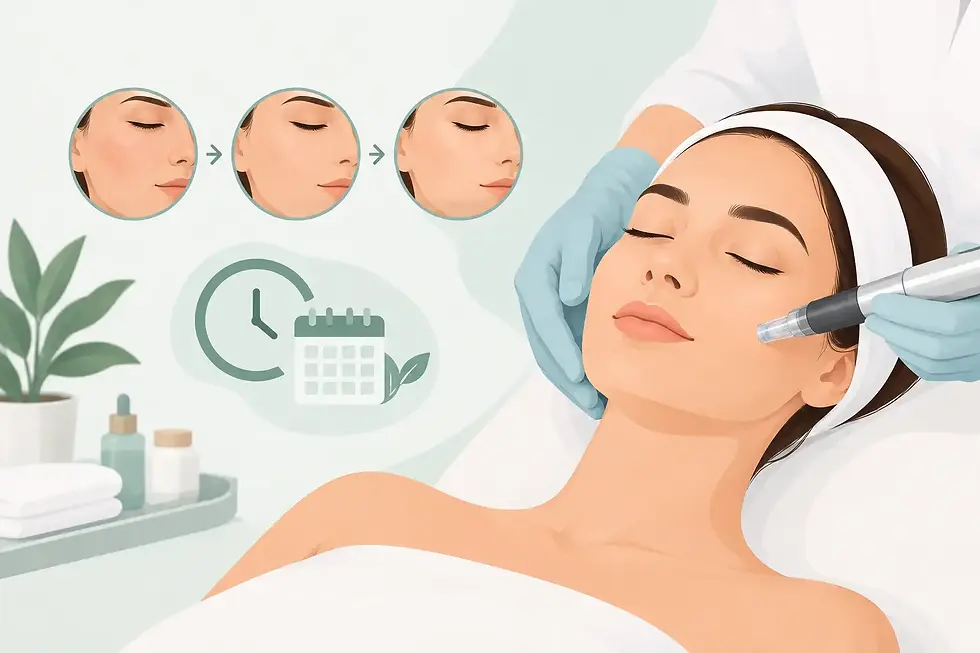
This is where structured treatment pathways are valuable. Services like enzyme-based skin revision, microneedling, and layered maintenance treatments can do more when they are timed with intention instead of booked randomly. The treatment itself matters, but so does the spacing, preparation, and follow-up.
For clients who want non-invasive results with more support, this kind of relationship-driven care often feels like a relief. You do not have to figure everything out alone. You start with a conversation, then build a routine that supports the life you want to live.
What to expect over time
Healthy skin progress is cumulative. In the first month, you may notice improved comfort, hydration, and a little more consistency. Over two to three months, texture, breakouts, and tone may start shifting more visibly. Over six months and beyond, the biggest changes often show up in resilience. Skin recovers faster, reacts less dramatically, and looks more balanced even without makeup.
That timeline can vary. If you have melasma, chronic sensitivity, or deeply congested skin, results may be slower and require more maintenance. If your skin is already in good shape and you mainly want refinement, progress may feel more subtle. Neither experience is wrong. It just means your plan should match your starting point.
This is also why comparison is unhelpful. Your skin history includes sun exposure, hormones, stress, sleep, genetics, previous treatments, and how consistently you have cared for it. A sustainable routine respects that context.
How to keep your routine realistic
If your skincare plan depends on 10 steps twice a day, it probably will not last. The best routine is one you can return to even during busy weeks. Simplicity supports consistency, and consistency supports results.
Keep your daily routine clear. Protect in the morning. Cleanse and repair at night. Add professional treatments on a schedule that feels supportive, not overwhelming. Review your progress before changing direction. Most importantly, avoid making decisions from panic. Skin has fluctuations. A single breakout, rough patch, or week of dullness does not mean your routine is failing.
It helps to think in seasons, not moods. Give your products time. Let treatments build. Make adjustments because your skin has truly changed, not because social media convinced you that you are one serum away from perfect skin.
For many adults, especially those balancing careers, family, travel, and the Florida sun, skincare works best when it becomes part of ongoing wellness rather than a rescue mission. At YNG Aesthetics Lounge, that philosophy shows up in the way care is structured - not as isolated appointments, but as intentional support for long-term skin health.
A good long term skin care routine should leave you feeling guided, not overwhelmed. If your skin can rely on your care month after month, it has a much better chance of becoming the kind of skin that carries you confidently through every season.


Comments