
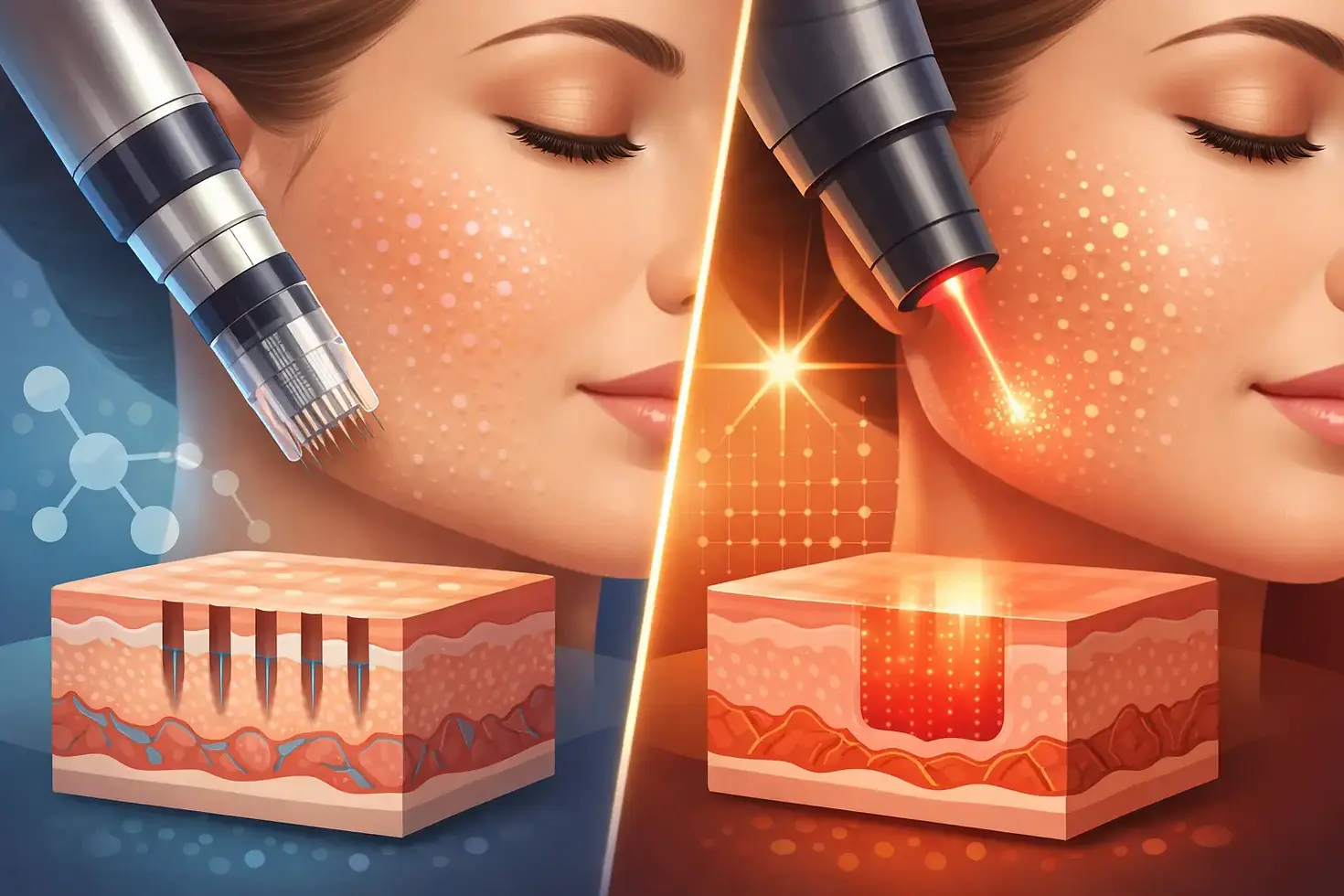
Microneedling vs Laser Resurfacing

If you are weighing microneedling vs laser resurfacing, you are probably not looking for the most dramatic treatment on paper. You are looking for the right one for your skin, your schedule, and the kind of results you want to build over time. That distinction matters, because these two treatments can both improve skin texture, tone, and signs of aging, but they do it in very different ways.
For many people, the real question is not which treatment is better. It is which treatment makes sense right now. Skin responds best when care is intentional, not rushed, and the best choice often depends on your barrier health, pigment concerns, tolerance for downtime, and long-term goals.
Microneedling vs laser resurfacing: what is the difference?
Microneedling creates controlled micro-injuries in the skin using very fine needles. Those tiny channels signal your skin to begin a repair response, which can stimulate collagen and gradually improve texture, mild scarring, and early signs of laxity. It is often chosen by clients who want steady improvement with less disruption to daily life.
Laser resurfacing uses concentrated light energy to target water or pigment within the skin, depending on the device. Some lasers remove portions of the skin's surface, while others heat deeper layers without fully ablating the top layer. Because of that, laser treatments can range from relatively mild to quite intensive.
That is why these services should never be treated as interchangeable. Microneedling tends to be a collagen-focused, barrier-conscious option with moderate recovery. Laser resurfacing can offer more aggressive correction, but it usually comes with more heat, more variables, and more downtime.
What each treatment tends to treat best
Microneedling is often a strong fit for clients concerned with acne scarring, mild textural irregularities, enlarged pores, and the early loss of firmness that can make skin look tired rather than lifted. It can also be a good option for people who want a corrective treatment that still feels compatible with maintenance-based skincare.
Laser resurfacing is often considered when sun damage, fine lines, deeper wrinkles, uneven tone, and more visible textural change are the priority. Certain lasers can also be used for redness or pigment, though the right technology matters a great deal. Laser is a broad category, and results depend heavily on the specific device, settings, and skin type being treated.
This is where nuance matters. A person with post-acne texture and reactive skin may do beautifully with a series of microneedling sessions. Someone with more advanced photodamage may benefit more from laser. Another person may need to improve skin health first before either option makes sense.
Downtime is often the deciding factor
For many busy adults, recovery is not a side note. It is part of the treatment decision.
Microneedling typically involves redness, mild swelling, and a sunburn-like feeling for a day or two, with some dryness or roughness as the skin moves through repair. Most people feel comfortable returning to normal routines fairly quickly, even if the skin is still a little pink.
Laser resurfacing can involve anything from a few days of redness to a much longer recovery, especially with more aggressive resurfacing treatments. Peeling, heat, swelling, and visible healing are more common. If you have events coming up, spend a lot of time outdoors, or know you struggle with aftercare consistency, that changes the conversation.
Choosing a treatment with more downtime is not wrong. It simply needs to match your real life. Skin treatments work best when they fit the life you want to live, not when they create stress you cannot realistically manage.
Microneedling vs laser resurfacing for skin of color
This is one of the most important parts of the decision and one that should never be rushed.
Microneedling is often considered a more flexible option for a wider range of skin tones because it does not rely on heat in the same way many lasers do. That does not mean it is risk-free, but it can be a more comfortable starting point for clients who are concerned about post-inflammatory hyperpigmentation.
Laser resurfacing in deeper skin tones requires particularly careful treatment selection and provider judgment. Some lasers are safer than others, and some settings can increase the risk of unwanted pigment changes. The issue is not whether laser can ever be used. The issue is whether the specific treatment plan respects your skin's biology.
Evidence-informed care means looking beyond the headline benefit and asking the harder question: what is the safest way to get you closer to your goal?
Results timeline: fast change vs gradual progress
Microneedling usually works in a series. You may notice a healthier glow fairly quickly, but collagen remodeling takes time. The improvements are often subtle at first, then more noticeable across several sessions. For clients who appreciate a steady, natural-looking progression, this can feel reassuring rather than disappointing.
Laser resurfacing can sometimes create more obvious visible change sooner, particularly when the target is surface damage or deeper wrinkling. But faster does not always mean better for every person. A more intensive result often comes with a more intensive healing process.
There is also the question of maintenance. Neither treatment should be viewed as a one-time fix that replaces consistent skincare, sun protection, or thoughtful follow-up. Beautiful skin is usually built through cumulative care.
Who may lean toward microneedling
Microneedling is often a strong choice for someone who wants correction without feeling pushed into an aggressive treatment path. It may suit you if your concerns are mild to moderate, if your schedule does not allow for extended downtime, or if your skin tends to be reactive and you want a measured way to stimulate renewal.
It also makes sense for clients who value a long-term plan. A series of treatments, paired with the right home care and seasonal adjustments, can support meaningful change while keeping the skin barrier in focus.
Who may lean toward laser resurfacing
Laser resurfacing may be more appropriate if your main goal is stronger correction of visible sun damage, etched-in lines, or more advanced textural change. It can be a valuable option when a provider determines that your skin can tolerate the intensity and that the expected downtime feels reasonable for your lifestyle.
That said, wanting strong results does not automatically mean you need the strongest treatment available. The right treatment is the one your skin can respond to well, safely, and consistently.
Why consultation matters more than comparison charts
Online comparisons tend to flatten everything into simple categories: less downtime, more downtime, better for scars, better for wrinkles. Those points are not useless, but they are incomplete.
Good treatment planning looks at your full picture. That includes current skin condition, sensitivity, history of pigmentation, medications, recent sun exposure, event timing, budget, and whether you are looking to correct, maintain, or elevate. It also includes your comfort level. Some clients want a slower, layered approach. Others are open to more intensity if the indication is right.
At a clinic like YNG Aesthetics Lounge, that conversation is part of the care itself. The goal is not to push you toward a trendy service. It is to help you choose a treatment pathway that supports long-term skin health and feels sustainable.
The better question to ask
Instead of asking microneedling vs laser resurfacing as if one has to win, ask this: what is my skin asking for right now?
Sometimes the answer is collagen support with minimal interruption. Sometimes it is deeper resurfacing. Sometimes it is neither, because the skin first needs calming, barrier repair, or pigment stabilization before corrective work begins. That kind of patience is not a delay. It is often what protects your results.
The best aesthetic care should leave you feeling more confident, not more confused. When a treatment plan is tailored to your skin, your goals, and your pace, results tend to look more natural and feel more worth it.
Start with a conversation, not a guess. Your skin will tell a clearer story when someone takes the time to listen.


Comments